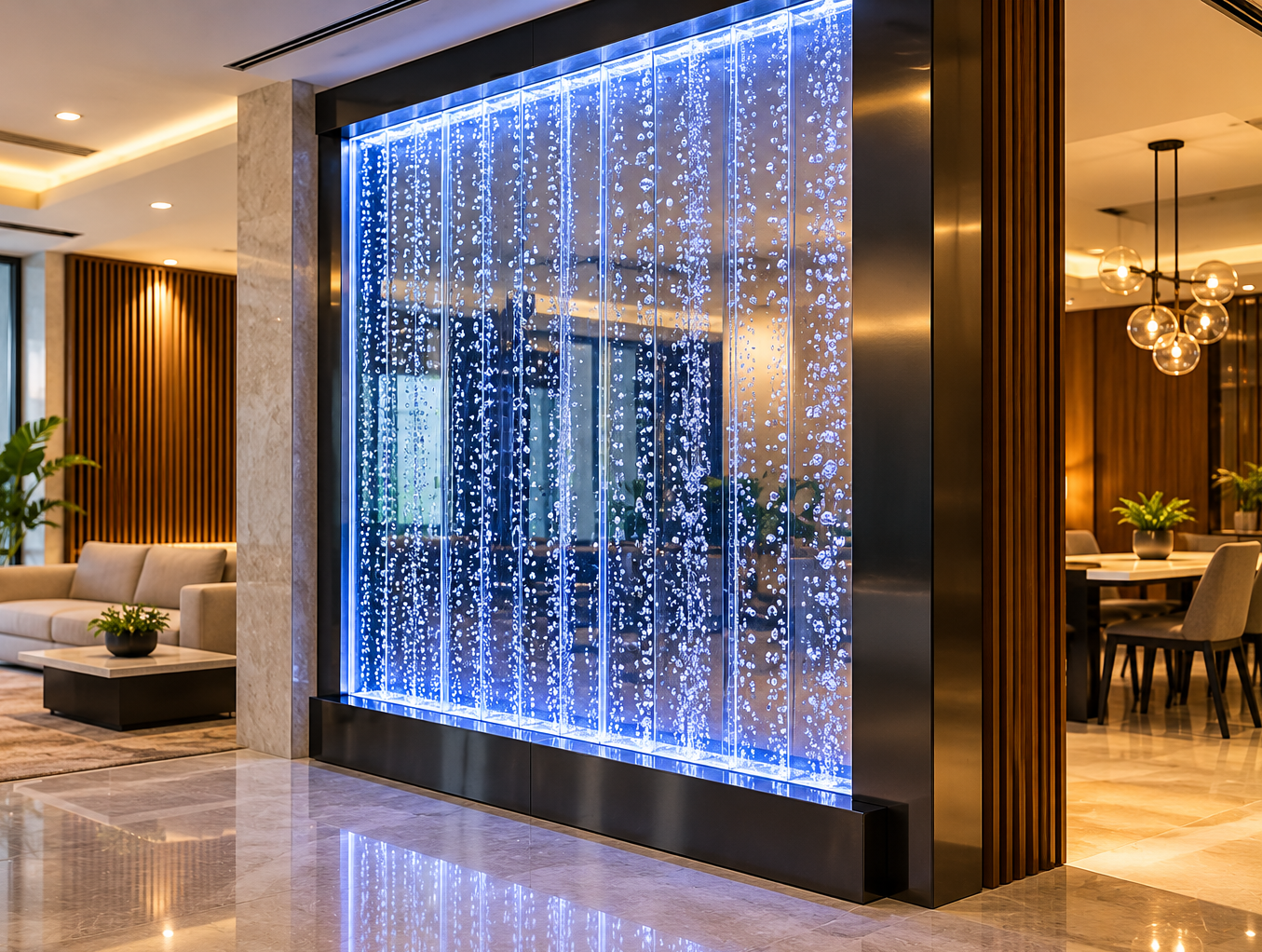
Water-inspired décor can create a strong visual focal point without requiring the footprint of a conventional fountain. Digital bubble walls use illuminated panels, controlled bubbles, and circulating water to produce continuous movement that can suit hotels, restaurants, reception areas, offices, showrooms, resorts, residences, and other designed interiors.
For businesses considering this type of feature, appearance is only one part of the buying decision.
Understand the Available Space
Start by measuring the intended installation area.
A tall bubble wall can emphasize vertical space in a reception area, while a wider installation may work better behind a hospitality counter or within a large interior feature zone.
Viewing distance also matters. A feature intended to be appreciated from across a hotel lobby needs different proportions from one positioned within a compact residential interior.
Consider the Surrounding Design
A bubble wall should complement the architecture rather than look like an unrelated addition.
Consider nearby materials, lighting, furniture, wall finishes, and circulation routes. The feature should be positioned where visitors can see it without creating an obstacle.
Interior designers and architects may find it useful to include the feature during the early design stage so that electrical supply and service access can be planned discreetly.
Examine Bubble Distribution
The visual effect depends heavily on how bubbles move through the panel.
Uneven bubble distribution can reduce the quality of the display. A well-planned system should create a visually balanced effect suited to the selected design.
The operating equipment should also be matched to the size of the installation.
Lighting Creates Much of the Impact
Illumination plays a major role in bubble-wall presentation, particularly in hospitality and commercial interiors.
The lighting arrangement should enhance the movement of the bubbles without creating uncomfortable glare. The desired atmosphere can vary significantly between a restaurant, corporate reception, hotel lobby, spa-like interior, or residential living space.
Controls should also be easy for staff or property owners to operate.
Ask About Maintenance Access
Decorative water features need maintenance.
Before finalizing a digital bubble wall, understand how the system can be accessed for cleaning, water management, pump servicing, lighting checks, and other routine attention.
An installation that looks seamless but provides no practical service access can become difficult to maintain.
Users should understand:
- Recommended cleaning frequency
- Water management requirements
- Access to operating components
- Lighting maintenance
- Pump servicing requirements
- Procedures for extended shutdown periods
These practical questions are especially important for hotels and commercial establishments where the feature may operate for many hours.
Plan Installation Professionally
Electrical components near water require appropriate installation practices. The mounting structure should also suit the dimensions and weight of the feature.
Nagpur Eco Agro works with decorative water features and landscape-related solutions for residential and commercial customers in Nagpur. For properties across Maharashtra seeking a contemporary visual feature, digital bubble walls can provide movement and illumination within a relatively focused installation area.
The strongest result comes from considering the complete environment rather than choosing a bubble wall only from a catalogue image. Size, location, viewing distance, lighting, bubble distribution, service access, structural support, and surrounding décor should all influence the final specification. A carefully selected digital bubble wall can then function as an integrated architectural feature rather than simply another decorative accessory.
Keywords