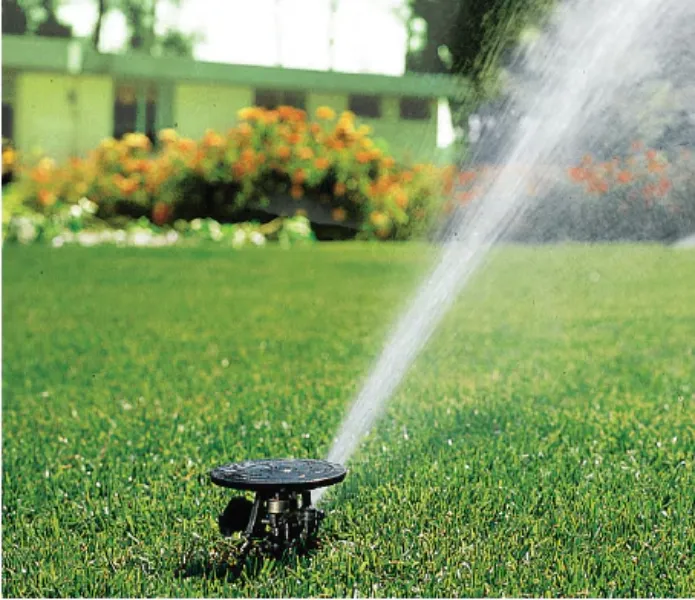
Large lawns and landscaped spaces need consistent watering, but manual watering can become time-consuming and uneven. Popup irrigation systems provide a structured method of distributing water across lawns by using sprinkler heads that rise during operation and retract when irrigation stops.
This makes them especially useful where appearance, convenience, and uniform watering matter.
How Popup Irrigation Works
Popup sprinklers are installed at or close to ground level. When water pressure reaches the sprinkler, the head rises and distributes water across a defined area. Once irrigation stops, it retracts.
Because the sprinklers remain unobtrusive when inactive, they can suit:
- Residential lawns
- Hotel landscapes
- Resort gardens
- School grounds
- Commercial campuses
- Builder developments
- Institutional landscapes
- Recreational green spaces
The system can be divided into watering zones according to the dimensions and requirements of the landscape.
Why Uniform Coverage Matters
Watering a lawn is not simply about supplying enough total water. Distribution also matters.
If one area receives excessive water while another remains dry, grass growth can become uneven. Overwatered sections may also experience waterlogging or unnecessary runoff.
Proper sprinkler spacing helps the spray patterns overlap appropriately, reducing dry patches.
Understand the Landscape First
A successful irrigation layout begins with a site survey.
The designer should consider lawn shape, total area, slopes, pathways, buildings, planting beds, water pressure, and available flow.
Different landscape areas may have different water needs. A lawn, for example, should not automatically receive the same irrigation schedule as shrubs or terrace plants.
Separating areas into appropriate zones provides greater control.
Water Pressure Can Affect Performance
Sprinklers rely on suitable operating pressure. When too many sprinklers are placed on one zone without considering available flow, performance can become inconsistent.
Some heads may fail to rise correctly, while others may deliver inadequate coverage.
For larger projects, hydraulic planning is therefore important. Pipe diameter, zone size, sprinkler type, and pressure conditions should be considered together.
Automation Can Improve Convenience
Irrigation controllers can operate selected zones according to scheduled timings. This can reduce the need for staff to manually open valves throughout a large property.
Automation is particularly useful for hotels, commercial properties, schools, builders, and institutional landscapes where routine maintenance needs to remain consistent.
Schedules should still be adjusted according to weather and seasonal plant requirements. Irrigation during rainy periods, for example, can result in unnecessary water use.
Maintenance Tips
Sprinkler heads should be checked periodically for blockages, physical damage, incorrect spray direction, or restricted movement.
Users should also look for:
- Unusually wet patches
- Dry areas
- Low sprinkler pressure
- Damaged pipes
- Water spraying onto pathways
- Heads blocked by overgrown grass
Early correction can prevent water waste.
Nagpur's hot periods can increase landscape irrigation requirements, making efficient distribution particularly important for properties in this part of Maharashtra. Nagpur Eco Agro handles landscape-related solutions where irrigation planning can be integrated into broader garden development.
A popup irrigation system works best when designed around actual landscape conditions. Appropriate zoning, hydraulic planning, sprinkler positioning, and maintenance can create healthier lawns while making routine watering far easier to manage.
Keywords