
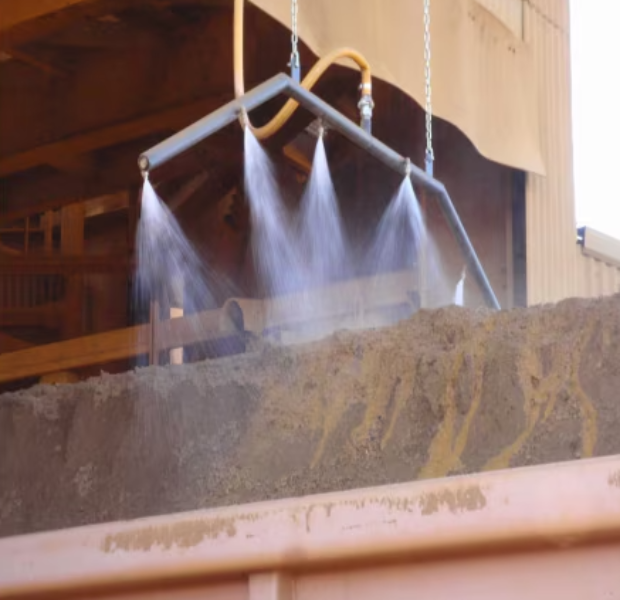
Dust is a persistent operational challenge at construction sites, material handling areas, industrial premises, stockyards, demolition zones, and other locations where fine particles can become airborne. Dust suppression systems use controlled water droplets to help capture airborne particles and reduce their movement through the surrounding environment.
For businesses evaluating dust control measures, understanding the source of the dust is the first step toward selecting a suitable system.
Why Dust Becomes Difficult to Control
Dust can be generated during several activities, including vehicle movement, loading, unloading, crushing, material transfer, excavation, or handling dry bulk materials.
Wind can carry these particles beyond the immediate activity zone. Simply spraying large amounts of water over an entire area may consume unnecessary water while providing inconsistent control.
A targeted suppression strategy focuses on locations where dust is generated or becomes airborne.
Fine Droplets Improve Targeted Suppression
Misting-based suppression systems create small water droplets that interact with airborne particles. The combined particles become heavier, helping reduce their ability to remain suspended.
Droplet size is important. Water that is too coarse may fall quickly without effectively interacting with fine airborne material. Excessive water can also create muddy surfaces, drainage problems, or operational inconvenience.
The objective is controlled application rather than maximum water volume.
Identify the Dust Source
Before choosing equipment, businesses should map the main dust-generation points.
Typical locations can include:
- Loading areas
- Material transfer points
- Construction boundaries
- Stockpile zones
- Vehicle movement routes
- Processing areas
- Demolition sections
- Waste handling locations
A site with one concentrated source may require a different configuration from a large property with multiple dust-producing zones.
Factors Affecting System Design
Several conditions influence the effectiveness of dust suppression.
Wind direction can determine where mist needs to be directed. Available water pressure affects nozzle performance. Water quality influences filtration requirements. The type of material being handled can also affect the desired droplet characteristics.
Installation height and nozzle spacing should be planned according to the target zone.
For large facilities, individual operating zones may improve control by allowing misting only where activity is taking place.
Avoid Common Planning Mistakes
One frequent mistake is installing nozzles without first understanding airflow. Another is assuming that more water automatically means better suppression.
Businesses should also avoid ignoring filtration. Fine nozzle openings can be affected by suspended particles or mineral deposits in the water supply.
Maintenance access should be considered from the beginning so that nozzles, filters, pumps, and piping can be inspected without disrupting operations.
Local Site Conditions Matter
Nagpur has significant construction, commercial, logistics, and industrial activity. Dry weather conditions in parts of Maharashtra can make airborne dust particularly noticeable at exposed sites.
Nagpur Eco Agro provides misting-related solutions that can be planned according to site dimensions and application requirements. For businesses considering a dust suppression system, a site-specific assessment can help determine where mist should be applied, how the system should be divided into zones, and what equipment specifications are appropriate.
Effective dust management comes from matching the suppression method to the actual source. A properly planned system can improve control while avoiding the inefficiency of indiscriminate water spraying.
Keywords


