Successful landscaping projects should do more than create an attractive photograph immediately after installation. A well-designed landscape needs to remain practical, healthy, comfortable, and manageable as plants mature and seasons change.
This is particularly important for homeowners, hotels, restaurants, schools, builders, resorts, offices, and institutions investing in outdoor development.
Start With How the Space Will Be Used
Landscape planning should begin with function.
A residential garden may need privacy, children's activity space, or a relaxing seating corner. A restaurant may want greenery that improves ambience without obstructing circulation. A school may prioritize durable planting and open areas. A resort may need multiple visual zones for guests.
Identifying these requirements early prevents decorative choices from interfering with everyday use.
Study Sunlight Before Selecting Plants
Plant selection should reflect actual site conditions.
Some areas may receive strong sunlight for most of the day, while sections near buildings remain shaded. Selecting plants only for appearance can lead to poor growth when their sunlight requirements are ignored.
The same principle applies to wind exposure, soil conditions, available rooting depth, and drainage.
Plan Irrigation During the Design Stage
Watering is often treated as a later addition, but irrigation can influence the entire landscape layout.
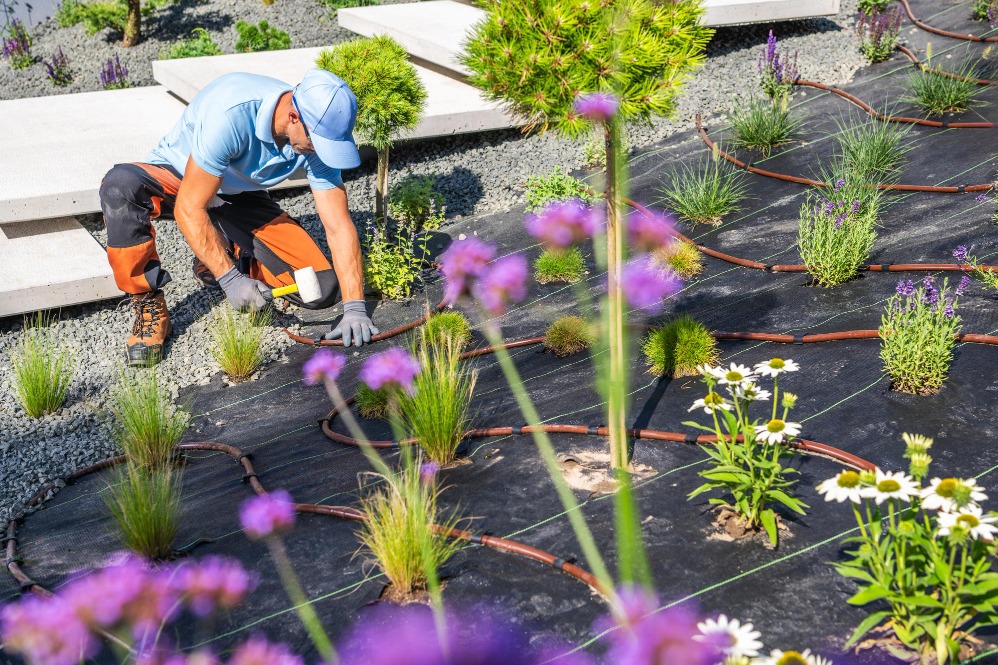
Lawns may benefit from popup sprinklers, while certain planting zones may be better suited to targeted irrigation. Terrace gardens require careful attention to drainage and water management.
Planning irrigation early also allows piping to be routed more neatly.
Create a Practical Planting Structure
Landscapes usually become easier to understand visually when plants are arranged in layers.
Ground covers can define lower areas. Medium-height shrubs add volume. Taller plants or trees can provide screening, shade, or vertical emphasis.
The final selection should account for mature plant size. Installing too many young plants close together may produce an attractive initial appearance but create overcrowding later.
Include Hardscape Thoughtfully
Paths, edging, planters, seating, decorative stones, water features, and other non-plant elements can improve usability.
These elements should support movement through the property. Pathways should lead naturally between important areas rather than forcing visitors to cross lawns or planting beds.
Material selection should also consider Nagpur's summer temperatures and Maharashtra's monsoon conditions.
Think About Maintenance From Day One
A landscape that requires more maintenance than the owner can realistically provide may deteriorate quickly.
Before finalizing a design, consider:
- Lawn mowing requirements
- Pruning frequency
- Seasonal plant replacement
- Irrigation maintenance
- Fertilisation schedules
- Leaf collection
- Water-feature cleaning
- Pest monitoring
Commercial properties should also consider how maintenance activities will affect guests or customers.
Develop the Landscape as One System
Nagpur Eco Agro works across gardening, irrigation, outdoor cooling, water features, and landscape-related requirements in Nagpur. This broader approach can be useful because planting, irrigation, decorative features, and practical infrastructure often affect one another.
For example, irrigation planning influences plant placement, while a fountain may affect nearby circulation and electrical planning. A terrace garden needs appropriate growing media as well as suitable containers and drainage.
The strongest landscaping projects therefore treat the outdoor area as an interconnected environment. When function, planting, water management, climate, maintenance, and visual character are considered from the beginning, the finished landscape has a better chance of remaining useful long after installation.
Keywords